
More room for a balanced bite.
UNDERSTANDING PALATAL EXPANSION
A wider foundation. A better-fitting bite.
A narrow upper jaw can affect how the upper and lower teeth meet. Palatal expansion is designed to increase the width of the upper jaw as part of a coordinated orthodontic treatment plan.
MARPE and SARPE use different approaches to achieve expansion. The right option depends on your jaw anatomy, skeletal maturity, gum and bone health, and treatment goals.
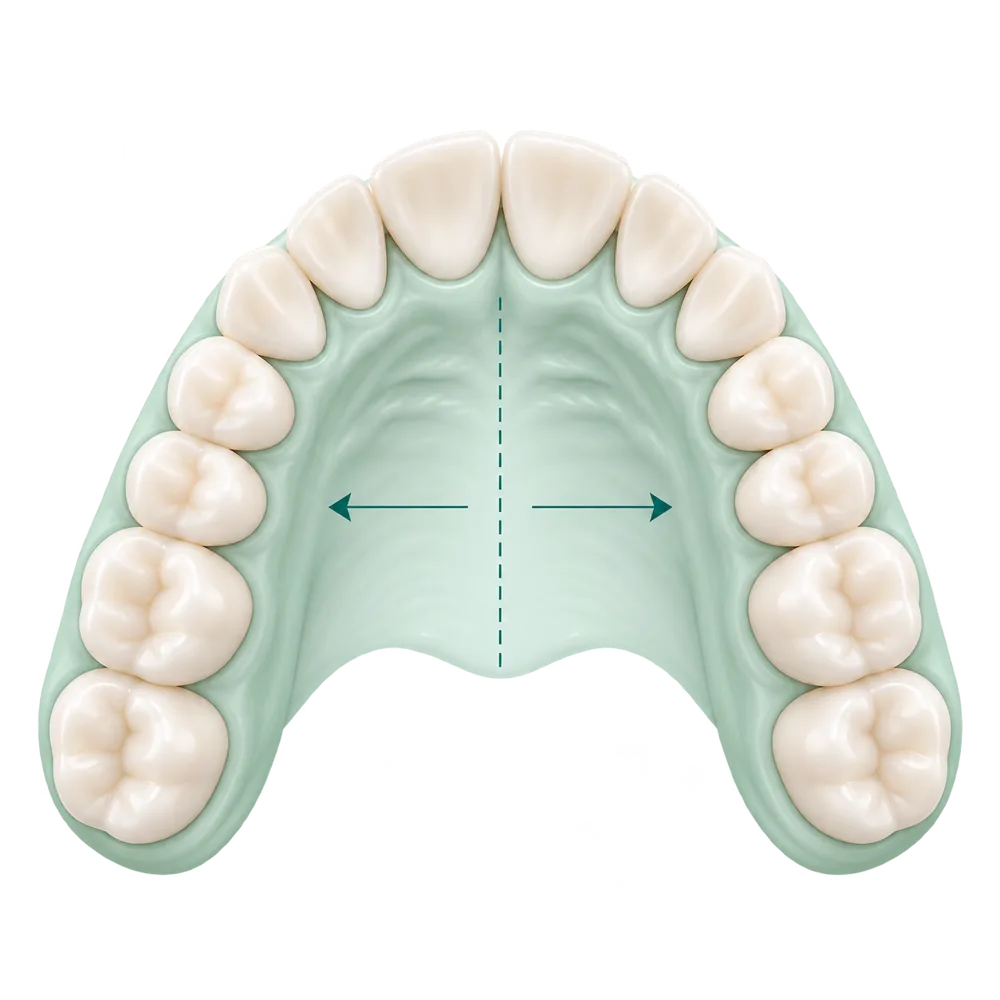
TWO APPROACHES. ONE PERSONALIZED PLAN.
MARPE or SARPE?
Understand the difference.
Both approaches use an expansion appliance. The main difference is how the upper jaw is prepared for expansion.
MINISCREW-ASSISTED EXPANSION
MARPE
Miniscrew-Assisted Rapid Palatal Expansion
An expander anchored with small screws in the palate applies expansion forces to the upper jaw.
- May offer an option without surgical bone cuts for selected patients.
- Suitability depends on anatomy and skeletal maturity.
- Requires monitoring and appliance adjustments as directed.
SURGICALLY ASSISTED EXPANSION
SARPE
Surgically Assisted Rapid Palatal Expansion
A surgical procedure helps release resistance in the upper jaw so an expander can gradually widen it.
- May be considered when skeletal resistance limits expansion.
- Combines surgical care with orthodontic treatment.
- Includes a surgical recovery period and follow-up visits.
IS EXPANSION RIGHT FOR YOU?
Start with the whole picture.
A consultation helps determine whether the upper jaw is narrow and whether expansion would support your bite and orthodontic goals.
A narrow upper jaw
A crossbite or bite imbalance
Orthodontic treatment needs
Your individual anatomy
IS EXPANSION RIGHT FOR YOU?
Start with the whole picture.
01
Consultation
Discuss your concerns, review your history, and evaluate your bite and jaw.
02
A coordinated plan
Your surgical and orthodontic teams determine the approach, appliance, and sequence of care.
03
Expansion & monitoring
Follow your team’s specific activation and care instructions, with visits to check your progress.
04
Stabilization & alignment
The appliance remains as directed while the expanded jaw stabilizes and orthodontic care continues.
QUESTIONS, ANSWERED
Feel informed. Move forward with confidence.
Your consultation is the time to ask questions and understand your individual treatment plan.