
A stronger foundation.
A confident next step.
When your jaw needs additional bone support, bone grafting can help prepare the way for dental implants and your next stage of care.
- Support for your jawbone
- A plan built around you
- Preparation for what’s next
A stronger foundation.
A confident next step.
When your jaw needs additional bone support, bone grafting can help prepare the way for dental implants and your next stage of care.
A stronger foundation.
A confident next step.
When your jaw needs additional bone support, bone grafting can help prepare the way for dental implants and your next stage of care.
01 - AFTER AN EXTRACTION
Preserve the foundation
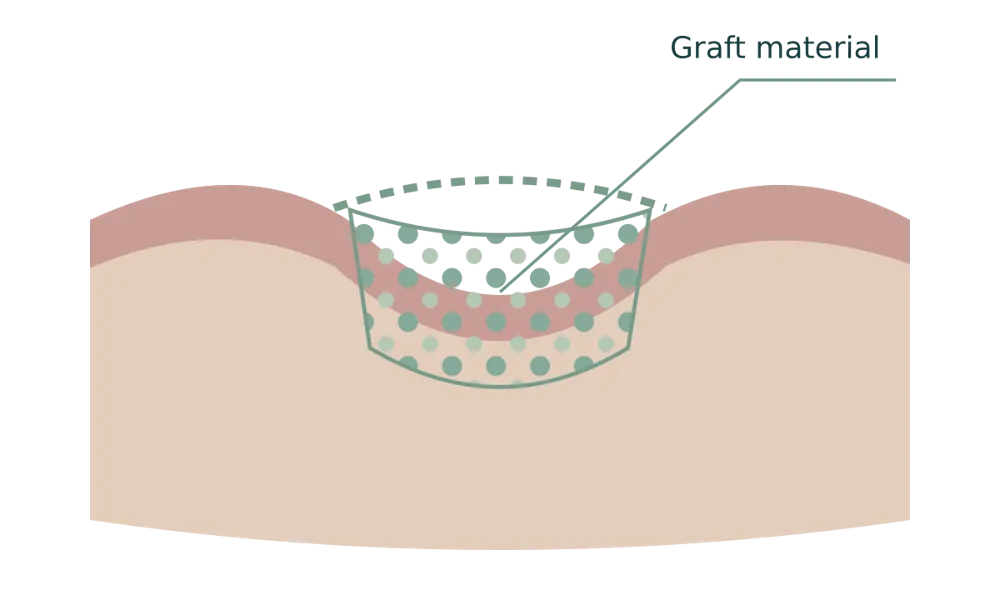
Grafting in an extraction socket may help limit changes in the bone as the area heals after a tooth is removed.
02 - BEFORE AN IMPLANT
Prepare for replacement
When the jaw lacks adequate bone, grafting may help create the support needed for a future dental implant.
03 - WHERE BONE IS LIMITED
Rebuild lost volume
Bone loss can follow missing teeth, gum disease, or injury. Your surgeon evaluates the area and discusses suitable options.
A stronger foundation.
A confident next step.
When your jaw needs additional bone support, bone grafting can help prepare the way for dental implants and your next stage of care.
Evaluate & discuss
An examination and appropriate imaging help your surgeon assess your bone and explain your options.
2
Personalize your plan
Discuss the graft material, procedure, comfort options, and how grafting fits into any future implant treatment.
3
Place the graft
Graft material is placed in the planned area. A protective membrane may be used, depending on the procedure.
4
Heal & reassess
Follow-up visits help your team assess healing and determine when you can move to the next treatment stage.
ANSWERS FOR YOUR NEXT STEP
Less uncertainty.
More understanding.
Bring your questions to your consultation. We’ll help you understand the recommendation and your options.